The best Pacific Northwest travel guide is the one that tells you to slow down. My first visit to the region was a tightly scheduled seven-day loop that left me photographing waterfalls through a windshield and eating gas-station sandwiches while racing to the next viewpoint. The second trip took three weeks, unfolded at walking speed, and taught me that the Pacific Northwest reveals itself only when you stop trying to conquer it. This is a landscape built for lingering: temperate rainforests that muffle sound and soften light, coastal headlands where low tide exposes entire ecosystems, mountain passes that close for half the year and open to meadows so vivid they look painted.
The Geography Insists on Patience
The Pacific Northwest stretches from the Pacific coast through the Cascade Range and into high desert, a topographic ribbon roughly 400 miles wide and 600 miles long. Most travelers focus on western Oregon and Washington, where the climate is maritime, the summers dry, and the winters wet but rarely frozen. The region's signature characteristic is not a single landmark but a pattern: dense forest interrupted by sudden elevation, water in every form, and weather that shifts hourly. On the Olympic Peninsula, the Hoh Rainforest receives up to 170 inches of rain annually, sustaining Sitka spruce draped in club moss that glows neon in diffused light[1]. Sixty miles east, the rain shadow of the Olympic Mountains drops annual precipitation below 17 inches. That kind of microclimatic drama cannot be experienced at highway speed.
Driving from Portland to the Oregon coast takes 90 minutes on paper. In practice, it requires half a day if you want to stop at Tillamook State Forest, pull over for Roosevelt elk grazing in roadside meadows, and walk the beach at Cannon Beach when the tide pools are exposed. The Cascade Loop, a 440-mile scenic byway through Washington, is marketed as a weekend drive. Travelers who treat it that way miss the point entirely. The loop passes through Leavenworth, crosses the North Cascades on Highway 20 (closed November through April), skirts the eastern edge of North Cascades National Park, and returns via Whidbey Island. Each segment contains trails, small towns with walkable downtowns, and pullouts where the views justify an hour of sitting still.
Oregon and Washington Destinations That Reward Extra Days
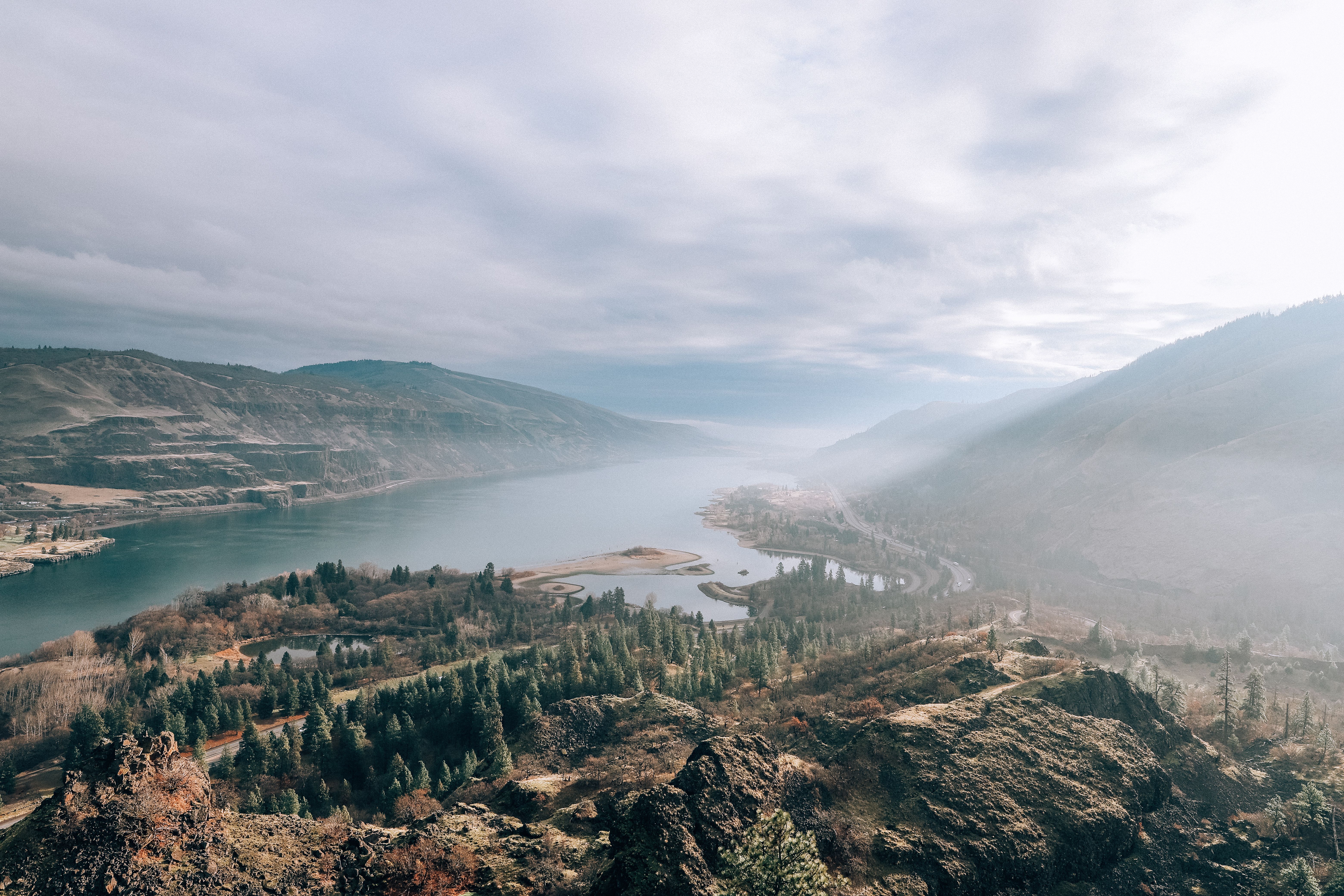
Portland anchors the southern end of the region, a city flanked by Forest Park, a 5,200-acre urban wilderness. The Columbia River Gorge begins 20 miles east, where waterfalls drop from basalt cliffs and trails range from paved half-mile walks to all-day scrambles[2]. Multnomah Falls draws the crowds; Wahclella Falls and Horsetail Falls draw the photographers who arrive before sunrise.
The Coast Unfolds in Chapters, Not Miles
Oregon's 363-mile coastline is public by law, accessible at every beach, and too varied to digest quickly. The stretch between Cannon Beach and Bandon contains nine state parks, each with distinct geology. Ecola State Park occupies forested headlands north of Cannon Beach, where trails wind through Sitka spruce to viewpoints over Tillamook Rock Lighthouse. Twenty miles south, Oswald West State Park protects Short Sand Beach, a cove framed by old growth and popular with surfers year round. Cape Perpetua, the highest point on the Oregon coast, offers tide pools, blow holes, and a stone shelter built by the Civilian Conservation Corps in 1933.
Washington's coastline is shorter and wilder. The Olympic Peninsula's western edge is largely undeveloped, with beaches accessible via short trails through coastal forest. Ruby Beach, Rialto Beach, and Shi Shi Beach require walking, and the payoff is driftwood sculptures the size of shipping containers, sea stacks colonized by stunted spruce, and tide pools where ochre sea stars cling to mussels. The North Cascades, by contrast, demand verticality. North Cascades National Park receives fewer than 40,000 visitors annually despite containing more than 300 glaciers[1]. The park has no lodges, limited road access, and trails that climb steeply into alpine cirques. Cascade Pass, a 7.4-mile round trip, ascends 1,800 feet to a saddle where Johannesburg Mountain rises directly overhead.
When to Visit and What the Seasons Reveal
Summer is the obvious choice and the busiest season. July through September brings dry weather, warm days in the 70s, and long daylight hours that stretch past 9 p.m. Campgrounds fill, trails crowd, and lodging prices peak. Spring arrives unevenly, with wildflowers blooming at low elevations in April while mountain passes remain snowbound into June. The tradeoff is fewer people and waterfalls at maximum volume. Fall reverses the pattern: crowds thin after Labor Day, vine maples turn crimson by mid-October, and rain returns gradually rather than all at once.
Winter is the season locals recommend and visitors avoid. Coastal storms are dramatic, forest trails turn muddy but remain passable, and lodging costs drop by half. High-elevation roads close, but that same snow transforms Mount Baker and Mount Hood into ski destinations[2]. The key is flexibility. Weather systems move quickly, and a rainy morning often clears by afternoon. Pack layers, waterproof shells, and boots that handle mud. The Pacific Northwest does not reward the underprepared, but it forgives those who adapt.
Building an Itinerary That Leaves Room for Detours
The mistake most travelers make is treating the Pacific Northwest as a checklist. A better approach is to choose a base, stay multiple nights, and explore radially. Three practical frameworks:
- Portland base, three nights minimum: Columbia River Gorge day trip, Mount Hood loop, Willamette Valley wine country, and Powell's City of Books for the inevitable rain day.
- Olympic Peninsula circuit, five nights: Port Angeles for Olympic National Park access, two nights near Forks for coastal beaches, Lake Quinault Lodge for rainforest immersion.
- San Juan Islands, four nights: Ferry from Anacortes to San Juan Island, kayak tours through kelp forests, whale watching from Lime Kiln Point, and cycling Lopez Island's rural roads.
Leave mornings unscheduled. The best experiences in the Pacific Northwest are unplanned: a farmer's market in Bellingham, a coffee roaster in Astoria, a trail recommended by a local at a trailhead. Speed eliminates serendipity. Unhurried travel creates space for it.
Practical Steps for Slowing Down Without Losing Momentum
Unhurried travel requires intentional planning, not the absence of it. Book accommodations with kitchens or at least coffee makers; preparing breakfast in your rental saves an hour each morning and eliminates the need to find a restaurant before exploring. Choose lodging centrally located within a region rather than moving every two nights. Staying four nights on the Olympic Peninsula costs less than two hotels with checkout logistics, and it allows you to return to a trail at different times of day or in different weather.
Limit daily driving to under three hours. The Pacific Northwest's topography makes distance deceptive; 100 miles through the Cascades takes twice as long as 100 miles on Interstate 5, and the scenery justifies frequent stops. Schedule one major activity per day, whether that's a hike, a ferry crossing, or exploring a town's galleries and cafes. Afternoons should be flexible enough to accommodate a detour to a roadside berry stand or an extra hour at a tide pool. Download offline maps for areas with limited cell service, particularly in national forests and along remote coastal stretches[3].
Pack a daypack with layers, a reusable water bottle, and snacks. Weather shifts quickly, and many of the region's best trails and beaches lack services. Binoculars enhance coastal wildlife watching, especially during gray whale migration season from March through May. A regional guidebook, preferably one focused on a single area rather than the entire Pacific Northwest, provides context that digital searches miss.
What You Gain by Resisting the Rush
Slowing down in the Pacific Northwest is not about sacrificing breadth for depth; it's about recognizing that depth is the point. Travelers who linger notice patterns the hurried miss: how the light changes as fog lifts off the Salish Sea, the way old-growth forest smells different after rain, the rhythm of tides that dictate when beaches reveal their ecosystems. You gain time to eat at restaurants locals recommend rather than highway diners, to hike trails without checking your watch, and to sit on a driftwood log watching waves without the pressure to document every moment.
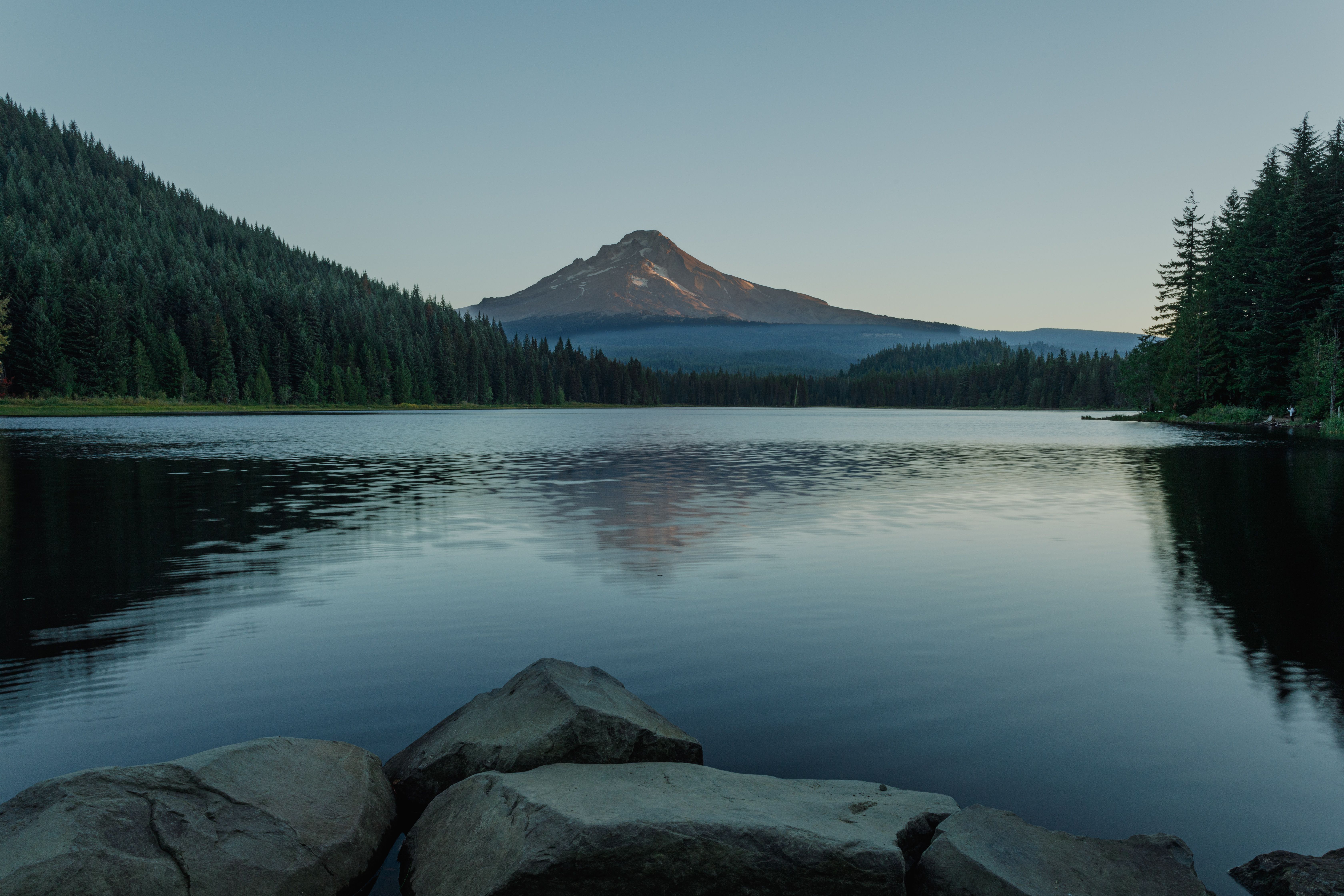
You also gain perspective. The Pacific Northwest's geography enforces humility. Mountains close roads for months, rain alters plans, and trails require effort. The region does not cater to speed, and that refusal is its greatest virtue.
My second trip to the Pacific Northwest ended without crossing every item off the list, and that felt like success. The places I missed became reasons to return. The unhurried traveler always leaves something unfinished.
Sources and references
- National Park Service Pacific Northwest
- Oregon and Washington tourism offices
- US Forest Service
- U.S. DOT Final Rule on automatic refunds