Istanbul's history as three empires in one city begins with Rome, transforms through Byzantium, and culminates in Ottoman splendor, all still visible in layers across seven hills. A single afternoon walk from the Hippodrome to the Hagia Sophia to Topkapi Palace traces 1,700 years of imperial power without ever leaving the old peninsula. The city UNESCO recognizes as a World Heritage site remains the only metropolis to have served as capital to both Christian and Islamic empires, and its stones, mosaics, and minarets preserve that duality in remarkable detail.[1] This is not a museum experience but a living archive where Roman columns anchor Ottoman fountains and Byzantine churches become mosques become museums again.
The Roman Foundation Still Anchors the Modern City
Constantine the Great chose Byzantium in 330 CE for its strategic position on the Bosphorus, renaming it Constantinople and building a city that would outlast Rome itself. The Hippodrome, once capable of holding 100,000 spectators, remains visible today as Sultanahmet Square, its original Egyptian obelisk and bronze Serpent Column still standing where charioteers once raced.[2] Theodosius II's massive land walls, stretching four miles from the Sea of Marmara to the Golden Horn, protected the city for a thousand years and survive in impressive sections throughout the Fatih district. Travelers can walk atop portions of these fifth-century fortifications near the Topkapi Gate, tracing the same defensive line that repelled sieges by Persians, Arabs, and Crusaders.
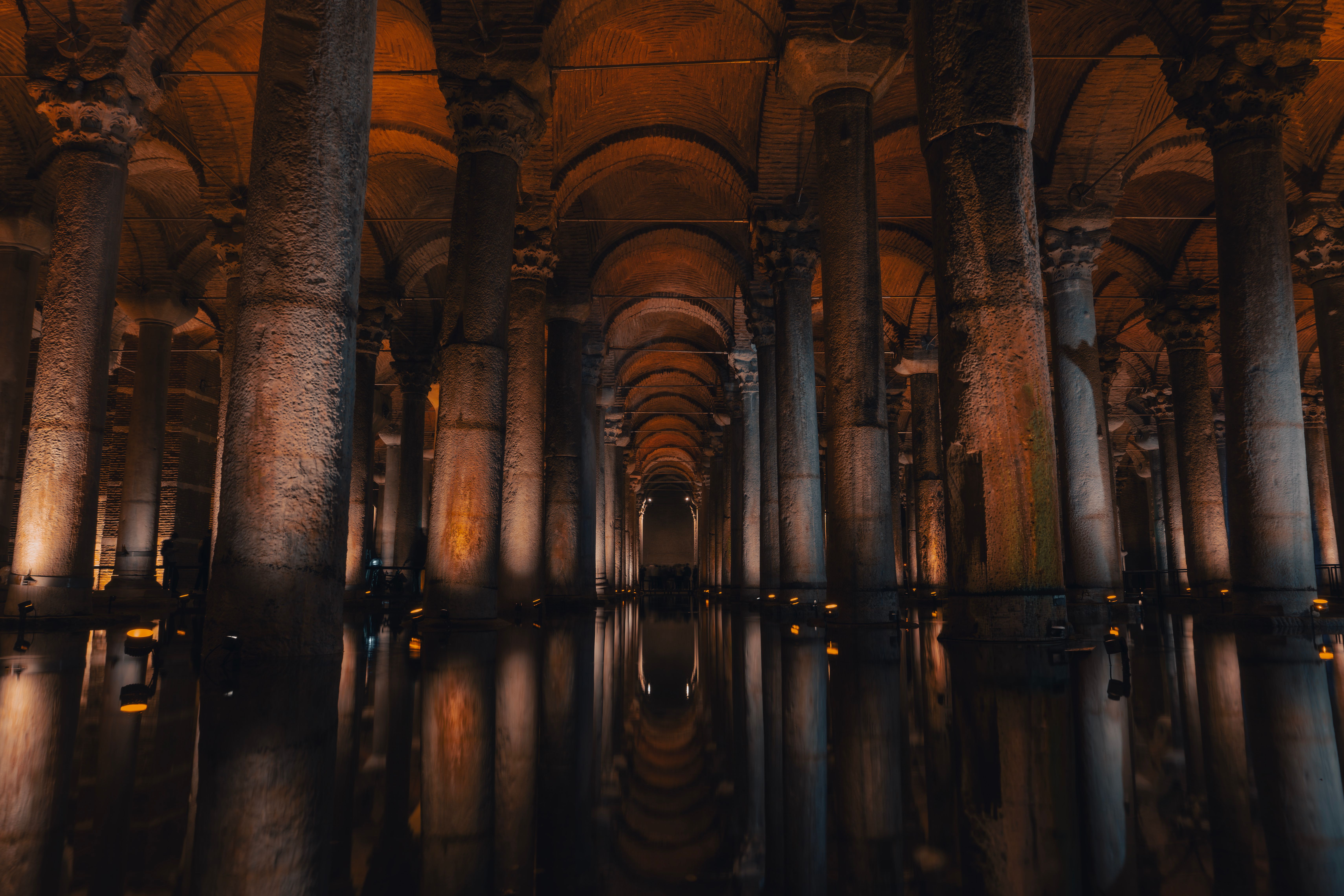
The Basilica Cistern, built by Justinian in 532 CE to store water for the Great Palace, descends 30 feet below street level and holds 80,000 cubic meters in a forest of 336 columns, many repurposed from earlier Roman temples. Two Medusa head carvings serve as column bases, their placement sideways and inverted suggesting pragmatic reuse rather than religious intent. The Valens Aqueduct, completed in 378 CE, still crosses the Atatürk Boulevard on two tiers of arches, once carrying water from forests 150 miles away into the heart of the imperial capital.
Byzantine Glory Reaches Its Apex in Hagia Sophia
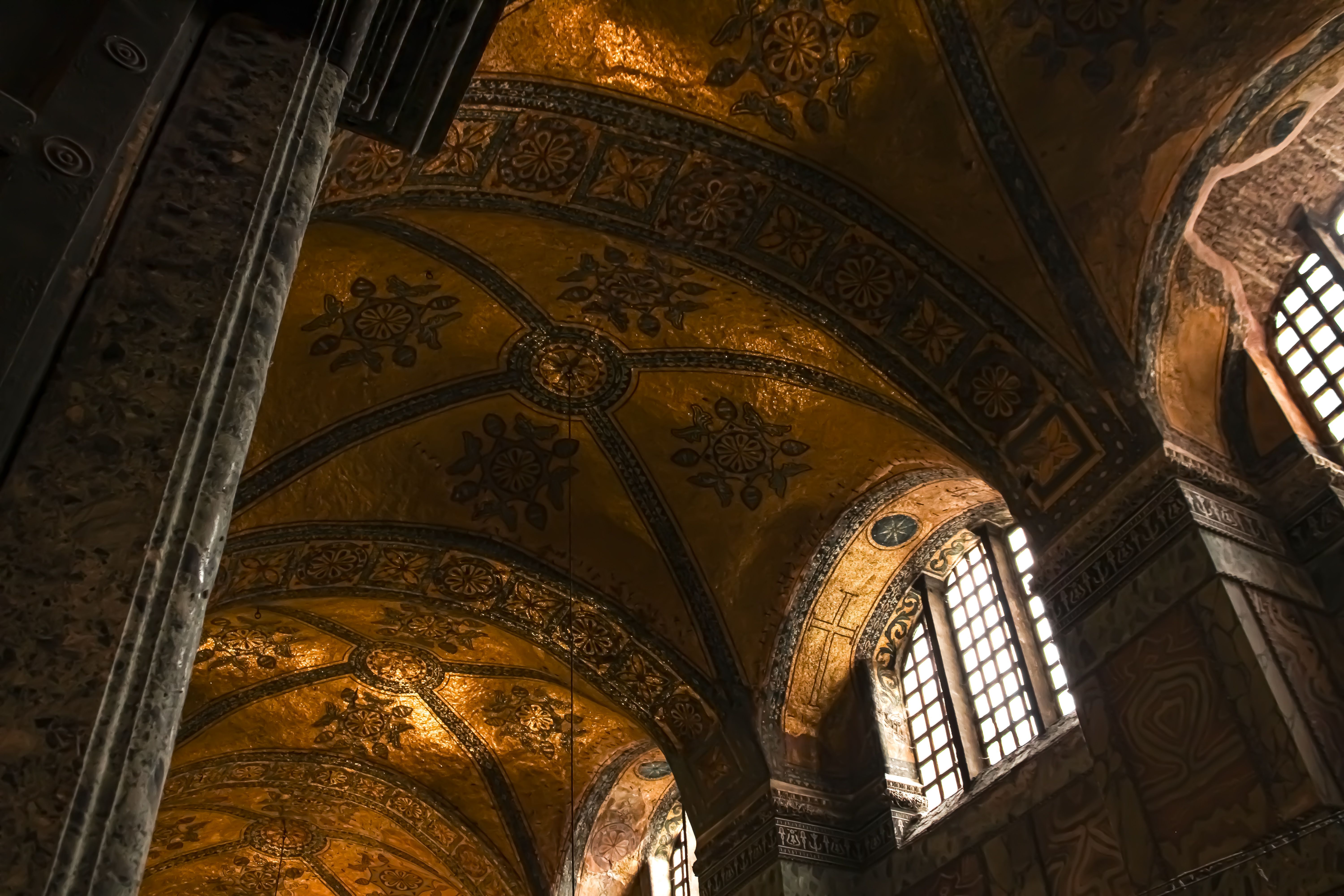
Justinian's Hagia Sophia, completed in 537 CE, represented the largest cathedral in the world for nearly a millennium and remains the defining monument of Byzantine architecture.[3] Its 180-foot dome appears to float above the nave, supported by pendentives that solved an engineering challenge no Roman builder had mastered. The interior preserves both Christian mosaics and Islamic calligraphy, including the Deësis mosaic in the upper gallery showing Christ flanked by Mary and John the Baptist in glittering 13th-century gold tesserae.
Ottoman Istanbul Transforms Without Erasing What Came Before
Mehmed II's conquest in 1453 marked the end of Byzantine rule but not the destruction of its monuments. The sultan commissioned Hagia Sophia's conversion to a mosque by adding minarets and covering Christian imagery with plaster rather than destroying it, preserving the mosaics that would later be uncovered in the 20th century. His construction of Topkapi Palace beginning in 1459 created an entirely new administrative center on the Acropolis, a complex that would house Ottoman sultans for 400 years and now displays treasures spanning four centuries of empire.[2] The palace's Imperial Council Chamber, Harem quarters, and Treasury rooms reveal the administrative machinery of an empire that stretched from Vienna to Yemen, while its kitchens once employed 800 staff to feed the court.
Sinan, the empire's greatest architect, designed mosques that responded to Hagia Sophia's challenge while establishing distinctly Ottoman forms. His Süleymaniye Mosque, completed in 1557, sits atop the Third Hill with a dome 174 feet high, supported by weight-bearing walls and semi-domes that create an interior sense of weightlessness echoing Justinian's masterwork. The complex included hospitals, schools, a caravanserai, and public kitchens that fed thousands daily, demonstrating the Ottoman model of architectural patronage as social infrastructure. The Blue Mosque, built between 1609 and 1616, introduced six minarets and 20,000 Iznik tiles in cascading blue patterns that give the structure its popular name.
Ottoman public works transformed daily life throughout the city through hundreds of fountains, hammams, and covered markets. The Grand Bazaar, established shortly after the conquest, grew to contain 61 covered streets and more than 4,000 shops organized by guild, from carpet merchants to gold dealers to spice vendors. Travelers navigating flight disruptions or lost baggage through Istanbul's airports can find resolution support through specialized flight compensation services before heading into the old city's historical districts.
Walking All Three Empires in One Day Requires Strategic Routing
A chronological tour through Istanbul's imperial layers works best starting at dawn in Sultanahmet, before cruise ship groups arrive at the major monuments. This routing allows morning light in the Hagia Sophia and avoids afternoon crowds:
- Begin at the Hippodrome obelisks and walk the Roman chariot racing track's original footprint
- Enter the Basilica Cistern when it opens to experience the underground Roman waterworks in relative quiet
- Tour Hagia Sophia's Byzantine mosaics in the upper gallery before the main floor becomes congested
- Cross to the Blue Mosque during midday prayer when tourists cannot enter but can appreciate the exterior architecture
- Proceed to Topkapi Palace for the afternoon, allowing three hours minimum for the Harem and Treasury
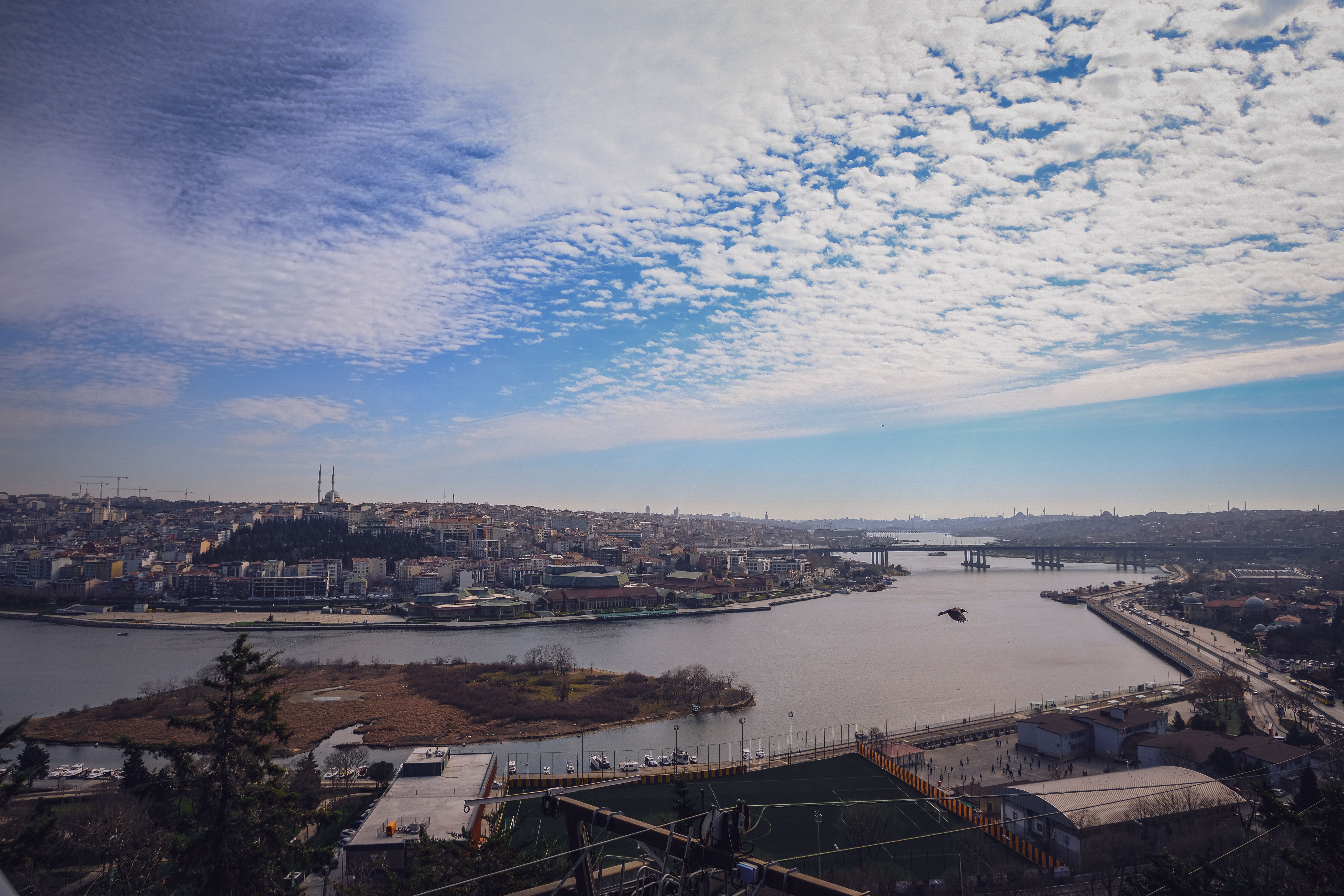
- Finish at the Süleymaniye Mosque complex for sunset views across the Golden Horn
The Istanbul Museum Pass covers admission to Topkapi, Hagia Sophia, and the archaeology museums for five days, eliminating ticket lines at each site. Audio guides at major monuments provide historical context but skip the architectural details that reveal how each empire built upon or adapted the previous layers.
Contemporary Travel Logistics Meet Ancient Streets
Istanbul's historic peninsula occupies less than three square miles, making it entirely walkable despite its density of monuments. The Sultanahmet tram line connects the major sites along a single route from the Grand Bazaar to the waterfront. Travelers dealing with extended layovers due to flight delays can consult connection protection resources while planning their imperial tour. Spring (April through May) and fall (September through October) offer the most comfortable temperatures for outdoor exploration, with summer bringing intense heat and winter occasionally closing the Bosphorus to ferry traffic.[2]
Book Combination Tickets and Skip the Line Entry Points
The five-day Istanbul Museum Pass provides admission to Topkapi Palace, Hagia Sophia, the archaeology museums, and the Turkish and Islamic Arts Museum for 1,650 Turkish Lira (approximately $60 USD), purchased at any participating museum or online through the official Ministry of Culture portal.[2] Fast-track entry lanes at Topkapi and Hagia Sophia save an average of 90 minutes during peak season, effectively paying for the pass on the first two sites alone. Digital versions work on mobile devices without needing physical collection, though wifi connectivity inside thick Byzantine walls can prove unreliable.
Guided tours led by licensed historians cost between 400 and 600 Lira for three-hour small group experiences, with morning departures offering the best light for photography in the Hagia Sophia dome. Private guides certified through the Turkish Ministry of Tourism provide deeper architectural analysis than audio guides, particularly useful for understanding how Ottoman architects responded to Byzantine engineering challenges. Reserve museum entry times at least three days ahead during summer months, when daily visitor caps frequently close ticket sales by noon. Travelers managing disrupted itineraries through Istanbul can reference insurance claim protocols when unexpected delays force itinerary changes.
Protect Your Investment in Multi-Day Historical Exploration
Trip interruption due to flight cancellations or extended delays can eliminate planned days in Istanbul's historic sites, but comprehensive travel insurance should cover prepaid museum passes and guided tours when delays exceed policy thresholds. Document all purchased tickets and tour confirmations immediately, as refund requests to Turkish tourism vendors require proof of disruption timing and original purchase receipts. The Museum Pass specifically states no refunds for unused days, making travel insurance the only recovery path when airline operational failures cut trips short.
Credit card travel protections often exclude admission tickets and local tours, covering only prepaid accommodations and transportation. Review policy definitions before departure to understand what qualifies as a reimbursable expense when delays force itinerary compression. Airlines causing cancellations or extended delays may owe compensation under Turkish consumer protection regulations when the disruption originates from their operational control, though navigating these claims typically requires local legal representation. Keeping digital copies of all empire-focused tour bookings creates the documentation trail necessary for successful insurance claims or credit card disputes.
The walk from Roman foundations through Byzantine glory to Ottoman mastery reveals not three separate cities but one continuous urban narrative written in stone, mosaic, and tile. Constantine's strategic vision, Justinian's architectural ambition, and Mehmed's cultural preservation together created the layered metropolis travelers explore today. Istanbul remains proof that empires need not erase their predecessors to establish greatness.
Sources and references
- UNESCO World Heritage Centre Historic Areas of Istanbul
- Turkey Ministry of Culture and Tourism
- Hagia Sophia historical record
- U.S. DOT Final Rule on automatic refunds