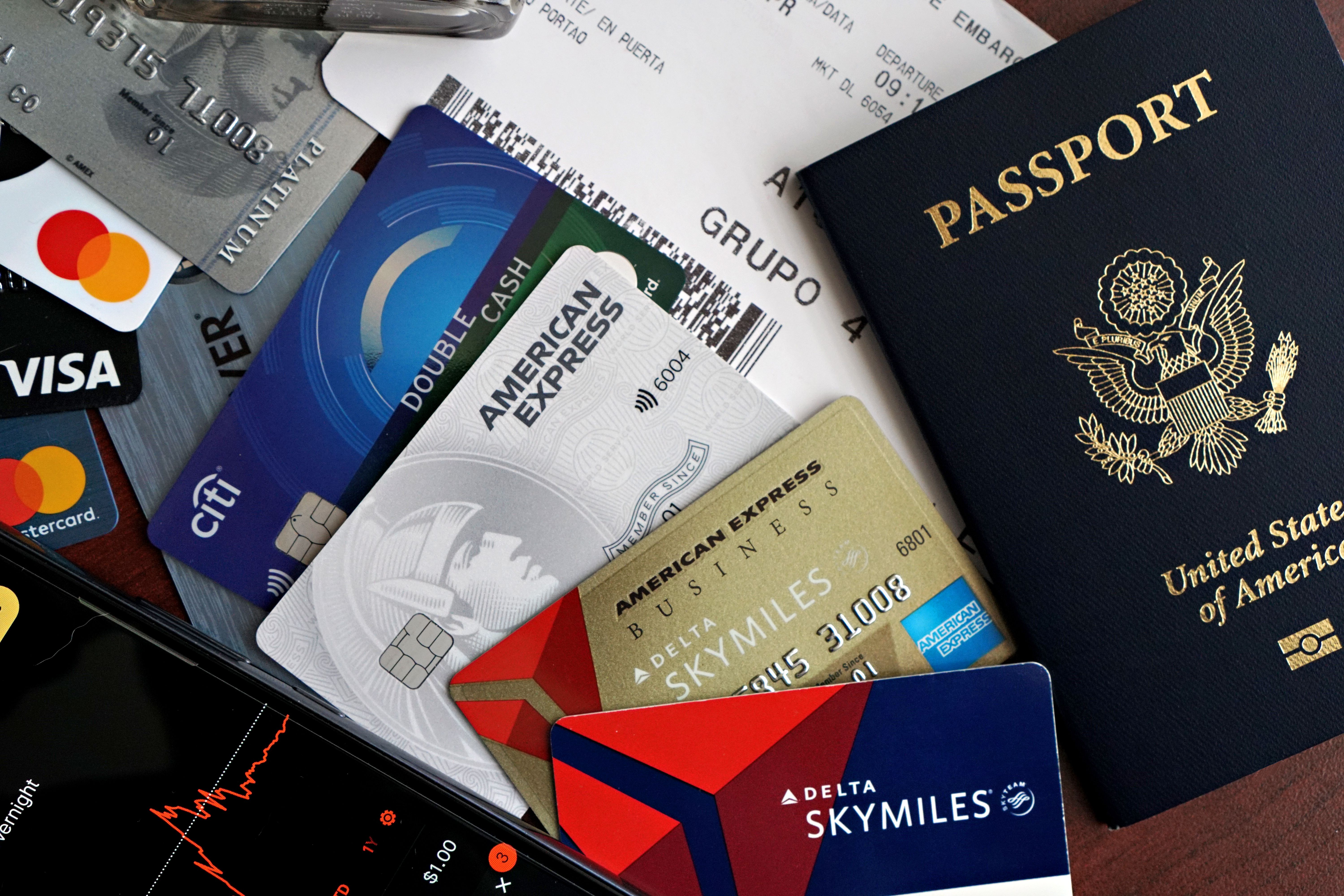
A United MileagePlus member in Newark redeems 25,000 miles for a flight to Orlando that costs $240 cash. Another member in San Francisco redeems 70,000 miles for a Lufthansa business-class seat to Frankfurt that would cost $4,200 at the gate. The first redemption values each mile at less than one cent. The second values the same United miles at six cents each. Same program, same day, six-times-different value.
The question "what are my miles worth?" has no single answer because airline miles don't have fixed value, they have realized value that depends entirely on what you exchange them for. A mile is worth what you get when you spend it, minus what you'd pay in cash for the same thing, divided by the number of miles you spent. Everything else is marketing. (For travelers who pay cash and lose money to delays or denied insurance, our claims-recovery service recovers what airlines and insurers owe.)
How Much Are Airline Miles Worth?
Airline miles are worth between $0.005 and $0.14 each depending on the redemption, with most economy domestic awards falling in the $0.012 to $0.018 range.[1] That wide range exists because airlines price awards based on their own revenue management, not on a fixed cent-per-mile rate.
The floor value is what airlines will pay you to buy miles back or convert them to statement credits. Most programs offer $0.005 to $0.007 per mile for direct purchases or merchandise redemptions, a signal of what the airline thinks your miles are worth when they control the exchange rate. Delta, United, and American all value miles at roughly half a cent when you redeem for gift cards or magazine subscriptions.
The ceiling value comes from premium-cabin international redemptions on partner airlines. A business-class seat from the U.S. to Europe that costs $4,000 to $6,000 in cash often requires 70,000 to 90,000 miles, yielding realized value between $0.04 and $0.08 per mile.[2] First-class redemptions on partners like ANA or Singapore Airlines can push realized value above $0.10 per mile when cash fares exceed $10,000 and award costs stay below 120,000 miles.

Our editorial team tracks redemption values quarterly across the six largest U.S. frequent flyer programs. For 2025, median realized value for economy domestic awards sits at $0.014 per mile, about 1.4 cents each. Premium international awards deliver median value around $0.06 per mile. The gap between those two numbers is where strategy lives.
Programs with dynamic pricing, Delta SkyMiles, JetBlue TrueBlue, and increasingly United MileagePlus, show wider variance than fixed-chart programs because award costs fluctuate with demand. A domestic economy seat might cost 8,000 miles on a Tuesday in February or 35,000 miles on a Friday in July for the same route. Dynamic pricing makes average values less meaningful and individual redemption math more important.
How Do I Calculate the Value of My Airline Miles?
Calculating mile value requires three numbers: the cash price of the ticket you want, the miles required for an award ticket on the same flight, and the cash taxes or fees charged on the award. The formula is straightforward: subtract award fees from the cash ticket price, then divide by miles required.
Example: A Los Angeles to Tokyo economy ticket costs $950 cash or 60,000 miles plus $87 in taxes. Subtract $87 from $950 to get $863 in cash you're avoiding. Divide $863 by 60,000 miles to get $0.0144 per mile, about 1.4 cents each. If the same seat in business class costs $4,300 cash or 90,000 miles plus $87, your realized value jumps to $0.047 per mile.
The calculation changes when comparing award tickets to refundable cash fares, which some travelers prefer for flexibility. A refundable economy domestic ticket might cost twice the basic economy fare, making the miles-versus-cash comparison less favorable. Only compare to the fare class you'd actually purchase, if you'd never buy a $600 refundable ticket and would only buy the $280 basic economy version, calculate value against $280.
Taxes and carrier-imposed surcharges matter significantly for international awards. British Airways adds $600 to $800 in fuel surcharges to transatlantic awards, which means 50,000 Avios plus $750 in fees for a seat that costs $900 cash delivers poor value. The same 50,000 Avios used for an American Airlines award with only $87 in taxes delivers much better realized value. Always include fee totals in your calculation.
Transfer bonuses change the math when you're moving points from flexible programs like Chase Ultimate Rewards or Amex Membership Rewards. If you transfer 50,000 Chase points to United during a 30% bonus promotion, you receive 65,000 United miles. Calculate your realized value using 50,000 as the denominator, not 65,000, because that's what you actually spent from your account. A redemption worth $0.015 per mile at face value becomes $0.0195 per mile when factoring in a 30% transfer bonus.
What Is the Best Use of Airline Miles?
The best use of airline miles, measured by realized cent-per-mile value, is booking premium-cabin international flights on partner airlines where cash fares are high and award availability exists. This isn't aspirational advice, it's arithmetic. A business-class seat from New York to Dubai that costs $5,800 cash or 76,000 American miles plus $130 in fees delivers $0.075 per mile in value. The same 76,000 miles used for four domestic economy roundtrips at $380 each delivers $0.020 per mile.
Partner airline awards consistently deliver higher value than the same cabin on the operating carrier because alliance partnerships were designed to fill premium seats that would otherwise go empty. United operates transatlantic business class with substantial unsold inventory, but selling those seats at $4,000 each to price-sensitive travelers would undermine revenue from corporate contracts. Releasing them at 70,000 miles to ANA Mileage Club members accomplishes two goals: filling seats and avoiding fare dilution. The result is relatively good award availability in premium cabins on partners compared to the issuing carrier.
Long-haul international flights in any cabin deliver better value than short-haul domestic because cash-fare pricing curves exponentially with distance while award pricing increases linearly. A 500-mile domestic flight might cost $180 cash or 12,000 miles, $0.015 per mile. A 7,000-mile international flight might cost $980 cash or 35,000 miles, $0.028 per mile. The longer the route, the more efficiently miles cover expensive cash fares.
Sweet spots exist in every program where award pricing hasn't kept pace with cash-fare inflation. American AAdvantage charges 57,500 miles for business class from the U.S. West Coast to Japan on Japan Airlines, where cash fares routinely exceed $4,000.[3] United charges 88,000 miles for Lufthansa first class to Europe when available, covering seats that sell for $8,000 to $12,000 cash. Delta occasionally releases Virgin Atlantic Upper Class to London for 60,000 miles when cash fares exceed $3,500. These awards deliver $0.06 to $0.10 per mile, four to seven times the value of domestic economy redemptions.

Our claims-recovery team sees a common pattern: travelers accumulate miles for years, then redeem them for domestic economy tickets because that's what they know how to book. A family of four redeems 200,000 miles for $2,800 worth of domestic flights at $0.014 per mile when the same miles could have covered $12,000 in international business-class seats at $0.06 per mile. The difference isn't luck, it's knowing where to look and being willing to adjust travel plans to capture value.
How Many Miles Do I Need for First Class?
First-class international awards require between 80,000 and 400,000 miles depending on the program, route, and partner airline, with typical transatlantic first-class awards ranging from 80,000 to 150,000 miles and transpacific awards ranging from 110,000 to 180,000 miles on fixed-chart programs. Programs with dynamic pricing show wider ranges because costs fluctuate with demand and cash-fare levels.
United MileagePlus charges 110,000 miles for first class from the U.S. to Europe on Lufthansa, though availability is severely limited. American AAdvantage charges 85,000 miles off-peak for British Airways first class to London, but carrier-imposed surcharges add $800 to $1,000 to the ticket. ANA Mileage Club, which you can access by transferring Amex or Marriott points, charges 110,000 miles for roundtrip first class from the U.S. to Japan on ANA metal with minimal fees, covering seats that cost $10,000 to $14,000 cash.
Delta eliminated its published award chart in 2015 and prices SkyMiles awards dynamically based on cash-fare demand. First-class Delta One Suites to Europe range from 100,000 to 500,000 miles one-way depending on date and route, with median pricing around 200,000 miles for transatlantic during peak season. This makes Delta miles less predictable for premium redemptions and harder to value in advance.
First-class award space is substantially scarcer than business class because airlines operate fewer first-class seats and reserve them for elite-status customers and upgrades. Emirates releases very little first-class space to partners. Singapore Airlines releases minimal Suites Class space. Lufthansa first class appears sporadically and vanishes quickly. The most consistent first-class availability comes from ANA on its own flights and from Air France on select routes, both bookable through partner programs.
For most travelers, business class represents better value than first class when measured by both miles-to-cash ratio and award availability. The marginal comfort improvement from business to first rarely justifies doubling the miles required, especially on daytime flights where lie-flat seats matter less. A 70,000-mile business-class seat covering a $4,500 fare delivers $0.064 per mile; a 140,000-mile first-class seat covering a $9,000 fare delivers the same $0.064 per mile but requires twice as many miles. The math favors business unless you're spending miles you'll never otherwise use.
When Are Airline Miles Worth More in Cash?
Airline miles are worth more redeemed for flights than converted to cash in virtually every scenario because airlines deliberately undervalue cash conversions to discourage redemptions that don't fill seats. Most programs offer $0.005 to $0.01 per mile when you redeem for statement credits, gift cards, or direct deposits, well below the $0.012 to $0.018 you'd realize from domestic economy awards and far below the $0.04 to $0.10 from premium international awards.
American AAdvantage allows members to redeem miles for statement credits at $0.01 per mile toward eligible purchases, but only on the AAdvantage credit card. That means 50,000 miles becomes $500 in statement credits when the same miles could book $700 to $900 in domestic flights or $3,000 to $4,000 in international business class. The option exists, but the exchange rate is designed to be unattractive.
Delta SkyMiles can be redeemed through the "Pay With Miles" feature at roughly $0.01 per mile when booking directly with Delta, but only when combined with an eligible Delta Amex card. United offers miles-plus-cash pricing on awards that effectively values miles around $0.01 each for the miles portion. Southwest Rapid Rewards consistently values points at $0.012 to $0.015 toward any Southwest flight because the program ties points directly to cash-fare pricing, Southwest is the only major U.S. carrier where "cash value" and realized award value align closely.
Credit card flexible points programs offer better cash-equivalent options than airline miles. Chase Ultimate Rewards points can be redeemed through the travel portal at $0.0125 to $0.015 per point depending on card type, or transferred 1:1 to airline partners for potentially higher value. Amex Membership Rewards can be redeemed at $0.006 per point for statement credits or $0.01 per point through the Amex travel portal with Platinum cards.[4] Capital One miles redeem at $0.01 per mile for any travel purchase, making them true cash equivalents for travel spending.
The only time airline miles approach reasonable cash value is when you have a small balance you'll never otherwise use before they expire. If you have 8,000 orphaned miles in an account and no path to earning more, redeeming them for $60 in merchandise at $0.0075 per mile beats letting them expire at $0 per mile. But that's a last resort, not a strategy.
Some travelers argue that miles have "opportunity cost" and that redeeming them frees up cash for other investments. This logic only holds if you'd otherwise spend the cash on the same flight, and if the alternative investment returns exceed the realized value of the miles. If you redeem 70,000 miles for a $4,200 business-class ticket you'd actually purchase in cash, you realize $0.06 per mile in value and keep $4,200 to invest. If you redeem the miles for a flight you'd never buy in cash, you're comparing a $4,200 ticket you don't value at that price against 70,000 miles. The math is personal, but claiming miles "have no value" because you wouldn't personally buy a $4,200 ticket ignores what those miles can purchase.
Where Published Values Miss the Point
Travel publications and credit card blogs publish monthly airline-mile valuations claiming "Delta miles are worth 1.2 cents" or "United miles are worth 1.3 cents." These figures represent statistical medians across thousands of redemptions, which makes them useful for comparing programs in aggregate but misleading for individual decisions. Nobody redeems the median award, you redeem specific flights with specific values.
Published valuations also muddle the difference between average realized value and achievable value. If 90% of travelers redeem miles poorly for domestic economy at $0.014 per mile and 10% redeem well for international business at $0.06 per mile, the average sits around $0.019, but that average tells you nothing about what you should do. The question isn't "what are miles worth on average?" but "what can I make them worth?"
The TravelWise Tech position: ignore published valuations and calculate value for each redemption you're considering. Open an award search, note the miles required and fees charged, compare to the cash fare for the same flight in the same cabin, and run the math. If the realized value beats $0.02 per mile, it's probably worth redeeming unless you have a specific better use coming soon. If it's below $0.015, you're doing worse than domestic economy and should reconsider.
The Miles You Have vs. The Miles You Need
Most travelers make redemption decisions based on miles they already have rather than planning travel around optimal values. Someone with 40,000 United miles books a domestic roundtrip for 25,000 miles at poor value instead of waiting to accumulate 70,000 miles for a business-class award worth three times as much per mile. The instinct to spend what you have creates a cycle of low-value redemptions.
Flexible points programs solve this problem by letting you transfer points to whichever airline program offers the best value for a specific trip. Chase Ultimate Rewards transfers to United, Southwest, Air France-KLM, British Airways, and Singapore Airlines among others. Amex Membership Rewards transfers to 21 airline partners including Delta, ANA, Air Canada, and Avianca. Capital One miles transfer to 15 partners. This flexibility means you can earn points in one place and shop for value across multiple programs when ready to book.
The strategy: accumulate flexible points, monitor cash fares for routes you want to fly, then search award availability across multiple programs when fares are high. If business class to Europe costs $4,500 and United releases space for 70,000 miles, transfer Chase points to United and book. If cash fares drop to $2,000, hold your points and pay cash. Flexibility turns miles from a fixed asset into a decision tree.
What This Means When You Book
Airline miles are worth what you can extract from them, which ranges from half a cent to fourteen cents depending on what you book. The travelers who realize the most value focus on premium-cabin international awards on partner airlines, where cash fares are high and award costs remain relatively predictable. Those who realize the least treat miles as monopoly money and redeem them for whatever's easiest.
The honest math says: save miles for flights that hurt to buy in cash, burn cash for flights that don't. A $240 domestic ticket is easy to justify; redeeming 25,000 miles for it at $0.0096 per mile isn't. A $4,800 business-class ticket is hard to justify; redeeming 75,000 miles for it at $0.064 per mile is. Your miles have their highest value precisely when cash alternatives feel out of reach.
Frequently asked questions
How much are airline miles worth?
Airline miles are worth between $0.005 and $0.14 each depending on how you redeem them. Most domestic economy awards fall in the $0.012 to $0.018 range,about 1.2 to 1.8 cents per mile. Premium international business-class redemptions deliver around $0.06 per mile, while first-class awards on partners like ANA or Singapore Airlines can push above $0.10 per mile when cash fares exceed $10,000. The floor value is what airlines pay to buy miles back: $0.005 to $0.007 per mile for gift cards or statement credits. Programs with dynamic pricing like Delta SkyMiles show wider variance because award costs fluctuate with demand.
How do I calculate the value of my airline miles?
Subtract award fees from the cash ticket price, then divide by miles required. Example: A Los Angeles to Tokyo economy ticket costs $950 cash or 60,000 miles plus $87 in taxes. Subtract $87 from $950 to get $863, then divide by 60,000 miles: $0.0144 per mile, or 1.4 cents each. Always compare to the fare class you'd actually purchase, not refundable fares you'd never buy. Include carrier-imposed surcharges in your calculation,British Airways adds $600 to $800 in fuel surcharges to transatlantic awards, which drastically reduces realized value. Transfer bonuses change the math: calculate using points actually spent, not the boosted total received.
What is the best use of airline miles?
The best use, measured by realized value, is booking premium-cabin international flights on partner airlines where cash fares are high and award availability exists. A business-class seat from New York to Dubai costing $5,800 cash or 76,000 American miles plus $130 delivers $0.075 per mile,nearly four times the $0.020 per mile from domestic economy redemptions. Long-haul flights deliver better value because cash fares increase exponentially with distance while award pricing increases linearly. Sweet spots include American charging 57,500 miles for business class to Japan on Japan Airlines, covering cash fares routinely exceeding $4,000, and United charging 88,000 miles for Lufthansa first class covering $8,000 to $12,000 seats.
How many miles do I need for first class?
First-class international awards require 80,000 to 400,000 miles depending on program, route, and partner airline. Typical transatlantic first class ranges from 80,000 to 150,000 miles; transpacific from 110,000 to 180,000 miles on fixed-chart programs. United charges 110,000 miles for Lufthansa first class to Europe, though availability is severely limited. ANA Mileage Club charges 110,000 miles roundtrip for first class to Japan on ANA metal with minimal fees, covering seats costing $10,000 to $14,000 cash. Delta prices dynamically: first-class transatlantic ranges from 100,000 to 500,000 miles one-way, with median around 200,000 during peak season. First-class space is substantially scarcer than business class.
When are airline miles worth more in cash?
Airline miles are worth more redeemed for flights than converted to cash in virtually every scenario. Most programs offer $0.005 to $0.01 per mile for statement credits or gift cards,well below the $0.012 to $0.018 from domestic economy awards and far below the $0.04 to $0.10 from premium international awards. American AAdvantage offers statement credits at $0.01 per mile when 50,000 miles could book $700 to $900 in domestic flights or $3,000 to $4,000 in international business class. Southwest Rapid Rewards is the exception, consistently valuing points at $0.012 to $0.015 toward any Southwest flight because the program ties points directly to cash-fare pricing.
Sources and references
- IdeaWorks airline frequent flyer report 2025
- Airlines Reporting Corporation data
- airline award charts (United, American, Delta)
- transferable points programs (Chase, Amex, Capital One)
- U.S. DOT Final Rule on automatic refunds